AI visibility tools answer one question your SEO rank tracker can’t: when someone asks ChatGPT, Perplexity or Google’s AI Mode for the best tool in your category, does your brand come up, and whose pages get cited instead?
Best AI Visibility Tools 2026: 15 Trackers Compared
That question now has a crowded market behind it. G2’s answer engine optimization category listed 248 products by April 2026. It started with seven in 2025. Most roundups ranking for this term are written by vendors who put themselves at number one, and their prices are months old.
So I went to every vendor’s own pricing page on 28 September 2026 and built this list from what the plans actually include: which AI engines you get at the entry price, how many prompts, how often they refresh, and whether an AI agent can pull the data through an API or MCP (the connector standard Claude, ChatGPT and Cursor use to call tools).
Some links below are affiliate links. If you buy through them, we may earn a commission. It never changes the order of this list, and most tools here pay us nothing.
Best AI Visibility Tools at a Glance
| Tool | Best for | Entry plan |
|---|---|---|
| Peec AI | Most content teams | €85/mo · 50 prompts · 3 engines |
| Semrush | Semrush users | $99/mo · 25 prompts · 3 engines |
| SE Ranking | Best-value SEO suite | $129/mo · 100 prompts · 5 engines |
| Surfer | Writing the fix | $95/mo · 50 prompts · 5 engines |
| Frase | Cheapest with a content workflow | $49/mo · 50 prompts · 2 engines |
| Ahrefs Brand Radar | Researching any brand | $129/mo · 5 prompts · pick of 7 |
| Otterly.AI | Tight budgets | $29/mo · 15 prompts · 4 engines |
| Profound | Enterprise brands | Custom · up to 9 engines |
| Scrunch | Changing what AI agents read | $250/mo · 125 prompts · 4 engines |
| AthenaHQ | Free plan | $0 (300 responses), then $295/mo |
How I Picked These AI Visibility Tools
I didn’t run all fifteen side by side for months, and I won’t pretend otherwise. This list is built from each vendor’s own pricing and documentation pages, checked on one day, so every number below is one you can verify yourself. I scored them on five things:
- Engines on the entry plan. Nearly every tool advertises “all major AI engines”, then gates half of them behind Enterprise. What you get at the price you’d actually pay is what counts.
- Prompts and refresh cadence. AI answers are unstable. Only 30% of brands stay visible from one AI answer to the next, and just 20% survive five runs of the same query. A weekly snapshot tells you very little. Daily tracking across a decent prompt set is the minimum for a trend you can trust.
- Price transparency. “Book a demo” isn’t a price.
- API or MCP access. If you run content workflows with AI agents, the visibility data should flow into them without CSV exports.
- Help acting on the gaps. A chart showing you’re missing from ChatGPT is only useful if the tool helps you work out what to publish or fix next.
1. Peec AI: Best AI Visibility Tool for Most Content Teams
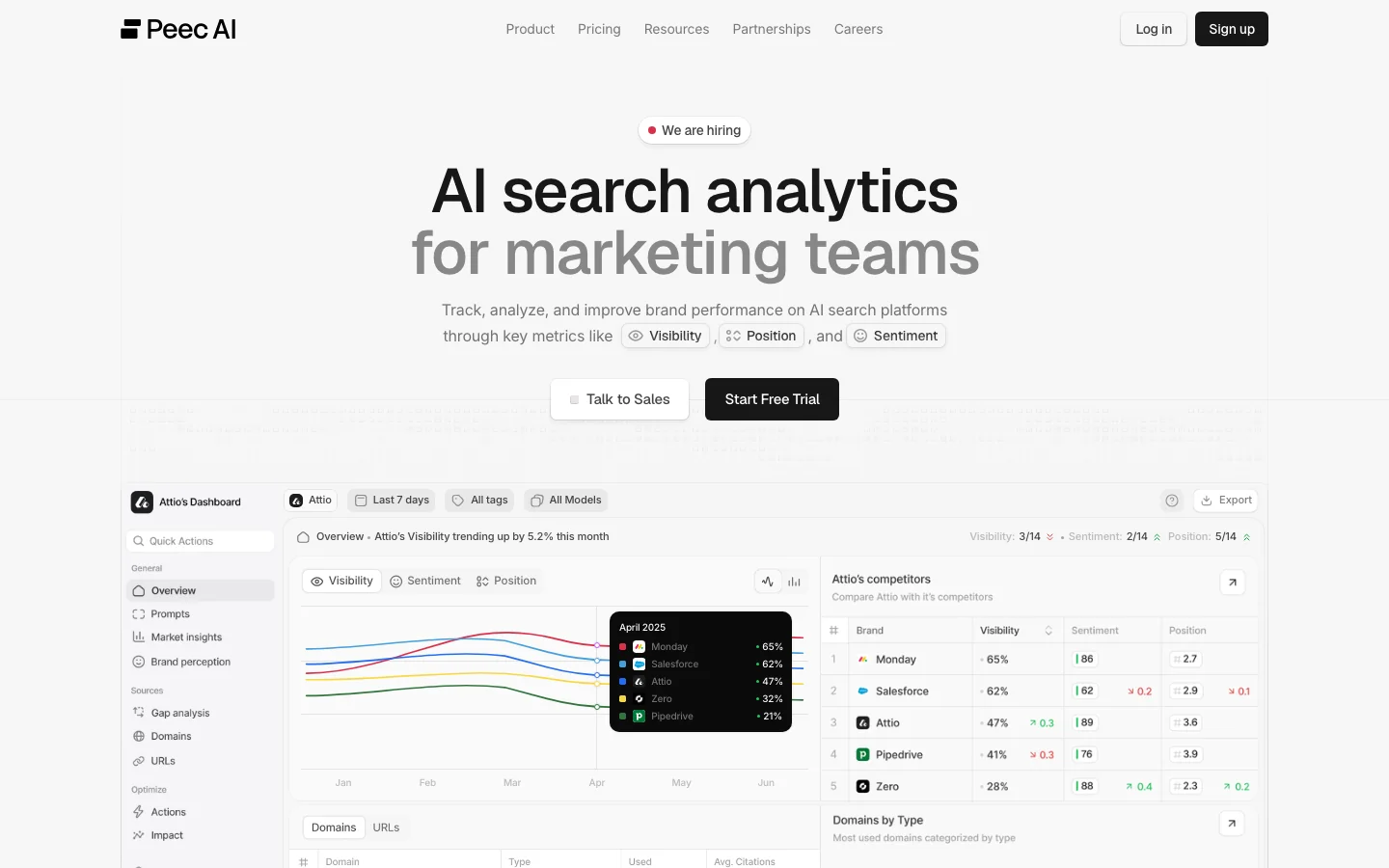
Peec AI is a dedicated tracker. It shows your visibility, position, sentiment and share of voice against competitors, prompt by prompt, refreshed daily. Its gap analysis lists the sources that cite your competitors but not you, which I think is the most useful report a content marketer can get from these tools, because it’s effectively an outreach and content list.
Pricing: Starter is €85/mo (the pricing page shows euros) for 50 prompts on 3 models of your choice, daily. Pro is €205/mo for 150 prompts and adds the API. Advanced is €425/mo for 350 prompts. Annual billing takes 15% off.
- Pro: MCP access is included on every plan, even Starter, so you can query your visibility data from Claude, Cursor or n8n.
- Pro: It fact-checks what AI engines say about your brand against statements you define.
- Con: Self-serve plans track only 3 models at once. Each extra model costs €25 to €115 a month, and Perplexity is an add-on rather than one of the standard picks. Perplexity is where a lot of B2B research happens, so I’d want it in the base three.
Where it fits: the weekly content meeting. Export the “cited for competitors, not for us” source list and turn it into briefs and pitches. Plans and features are broken down in our Peec AI review.
2. Semrush: Best for Teams Already Paying for Semrush
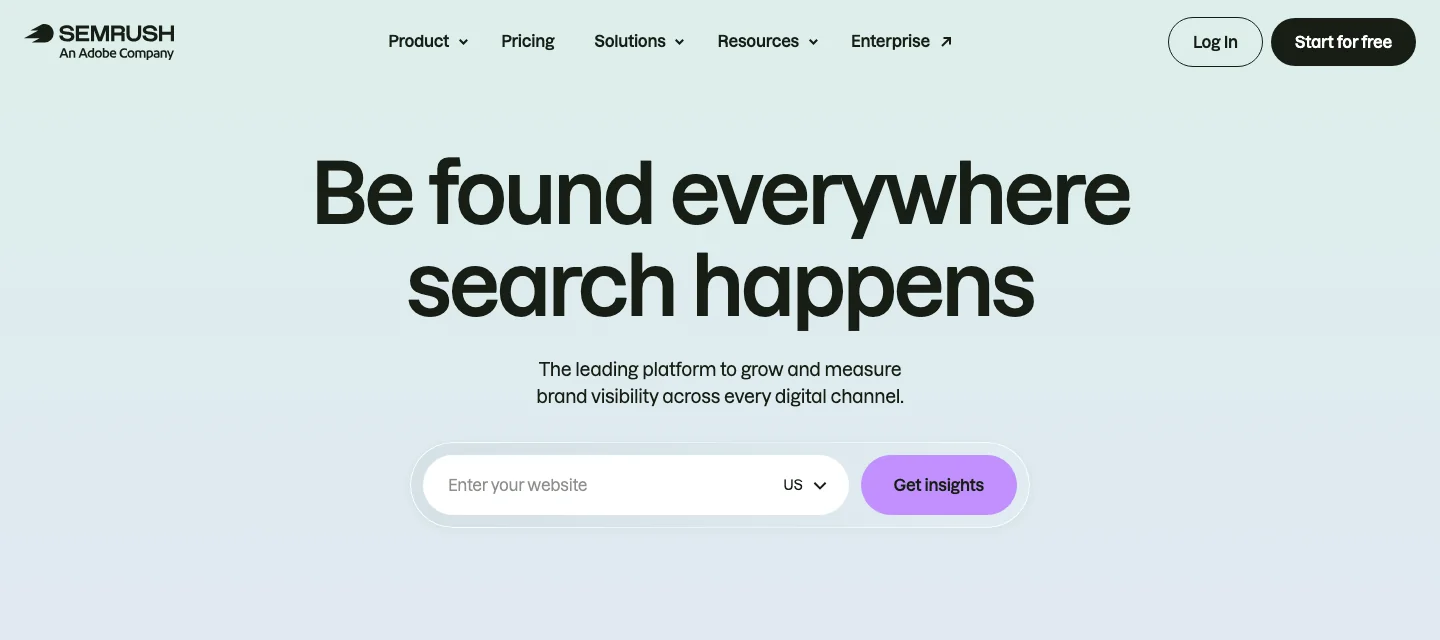
If Semrush is already your SEO tool, its AI Visibility Toolkit keeps AI tracking in the same projects and reports. The standout feature is Prompt Research, which gives topic-level “AI volume” and difficulty from a database of more than 317 million prompts. It works like keyword research for AI answers, which no dedicated tracker here offers.
Pricing: the catch is that the classic $139/mo SEO plan doesn’t include AI visibility. The features are greyed out on the plan card. You either add the AI Visibility Toolkit at $99/mo (25 prompts, daily) or move to Semrush One, which bundles SEO and AI visibility: Starter $199/mo (50 prompts), Pro+ $299/mo (100) and Advanced $549/mo (200). Semrush One has a 7-day free trial. See our Semrush trial guide for how to claim it.
- Pro: SEO rankings and AI visibility in one place, with MCP access from Semrush One Starter up.
- Con: Engine coverage is narrower than the marketing suggests. Prompt Tracking covers ChatGPT and Google’s AI surfaces, Perplexity appears only in the weekly Brand Performance reports, and Claude and Copilot aren’t tracked.
Where it fits: keyword research. Pair AI volume with search volume when you pick the next topic. Full breakdown in our Semrush review.
3. SE Ranking: Best-Value SEO Suite With AI Tracking Built In
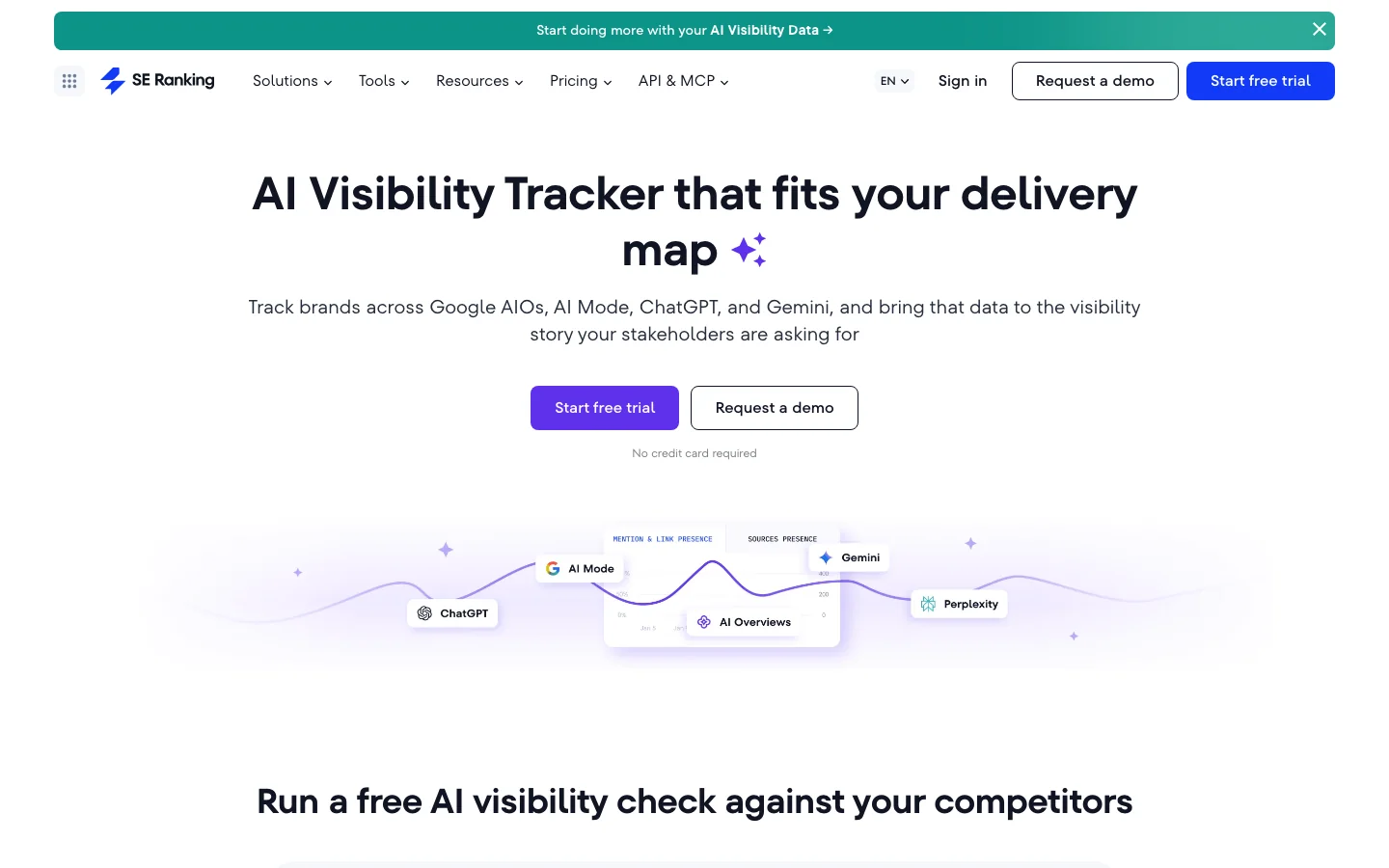
SE Ranking moved prompt tracking into its core plans, which gets you more tracked prompts for the money than any other full SEO suite here. Ahrefs Lite costs the same $129 but includes 5 prompts, not 100. It records linked and unlinked brand mentions, your position among cited sources, and a cached copy of each AI answer so you can see exactly what the engine said.
Pricing: Core is $129/mo and includes 100 prompts tracked daily across five AI engines, plus 2,000 keywords. Growth is $279/mo for 250 prompts. If you only want the AI side, SE Visible starts at $99/mo for 200 prompts. There’s a 14-day free trial with 20 AI prompts a day.
- Pro: It collects answers through the engines’ own interfaces rather than their APIs, which is closer to what a real user sees.
- Con: No Claude or Copilot tracking yet. Claude, sentiment and query fan-out are all labelled “coming soon” on SE Visible.
Where it fits: small teams and agencies that want one bill for SEO and AI search.
4. Surfer: Best for Content Teams That Want to Write the Fix
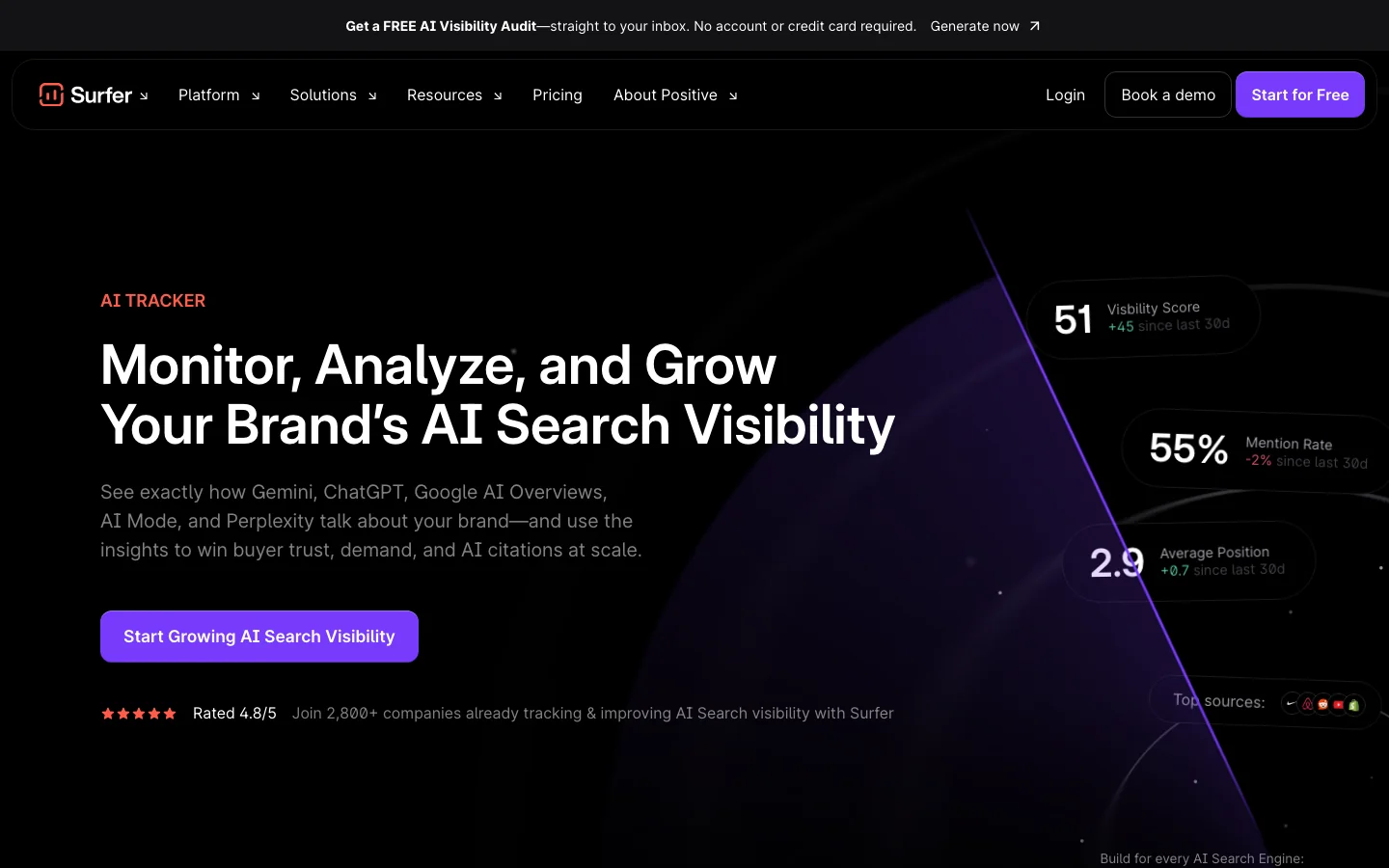
Surfer’s AI Tracker shows your visibility score, mention rate, sentiment and the top cited sources. What sets it apart is what happens next: the gaps feed into Surfer’s Topical Map, Content Editor and Content Audit, so the page that closes the gap gets written in the same tool that found it.
Pricing: the AI Search Analytics plan is $95/mo ($82 billed yearly) for 50 prompts refreshed daily across ChatGPT, Perplexity, Google AI Mode, AI Overviews and Gemini. One prompt counts across all five models, which is more generous than per-engine pricing. Pro at $219/mo adds the full content toolkit to the same 50 prompts.
- Pro: Track-then-write in one subscription, with MCP access on the AI plan and Pro.
- Con: The $119/mo Standard plan tracks only ChatGPT, 25 prompts, weekly. And there’s no Claude or Copilot tracking on any plan.
Where it fits: content refreshes. See our Surfer review and the current Surfer coupon.
5. Frase: Lowest Entry Price With a Content Workflow
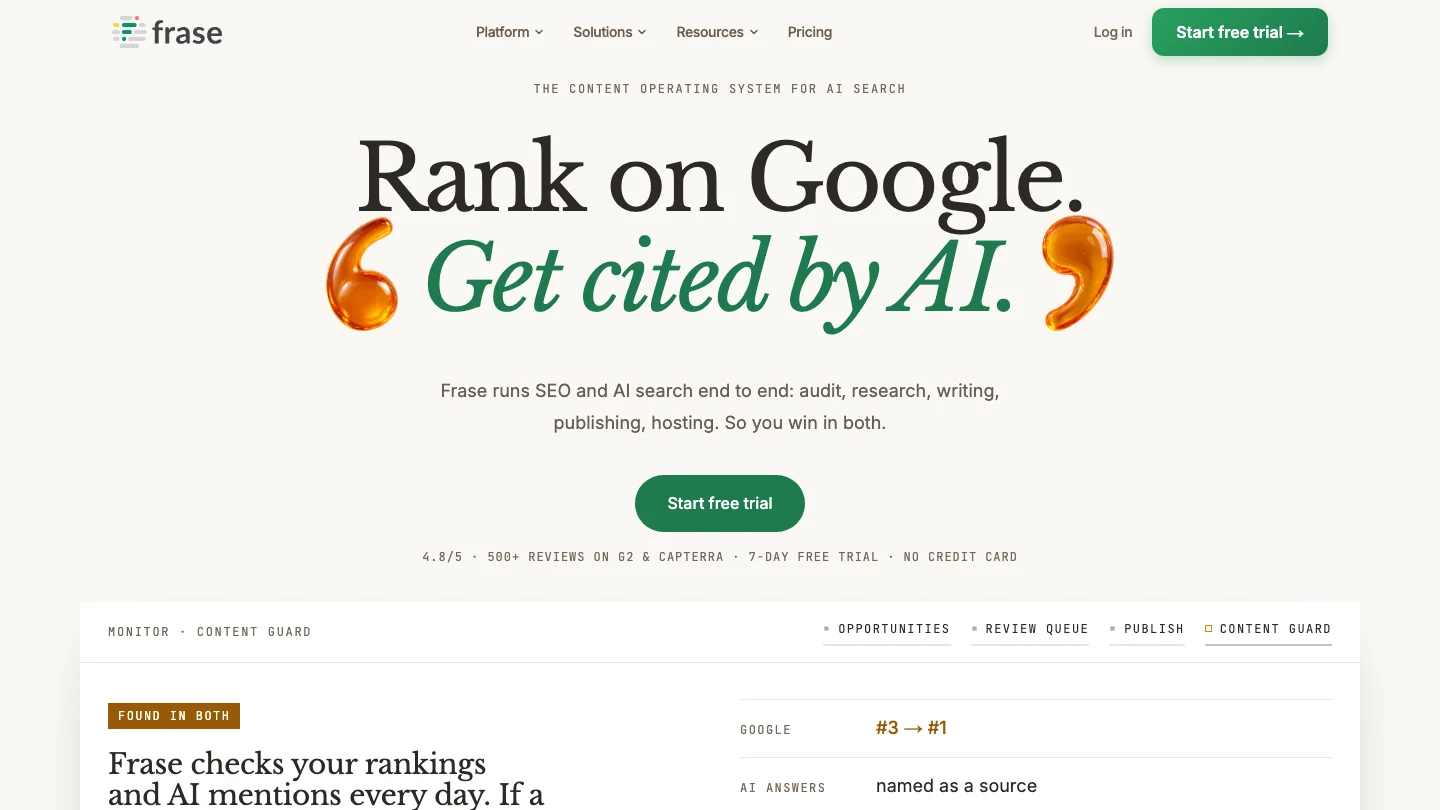
Frase includes AI visibility on every plan rather than selling it as an add-on. It sorts each tracked prompt by buying stage (awareness, consideration, decision) and benchmarks your citation rate against your industry every week, so you can see where in the funnel AI drops you.
Pricing: Starter is $49/mo for 50 prompts on ChatGPT and Google AI. Professional is $129/mo for 200 prompts and adds Perplexity. Scale is $299/mo for 500 prompts and adds Claude and Gemini. There’s a 7-day trial with no credit card.
- Pro: MCP server and CLI on every plan, plus direct publishing to WordPress, Webflow and Sanity.
- Con: Claude and Gemini only unlock at $299/mo, and “Google AI” is never split into AI Overviews and AI Mode.
Where it fits: a solo content marketer who wants tracking, briefs and publishing for under $50. More in our Frase review.
6. Ahrefs Brand Radar: Best for Researching Any Brand
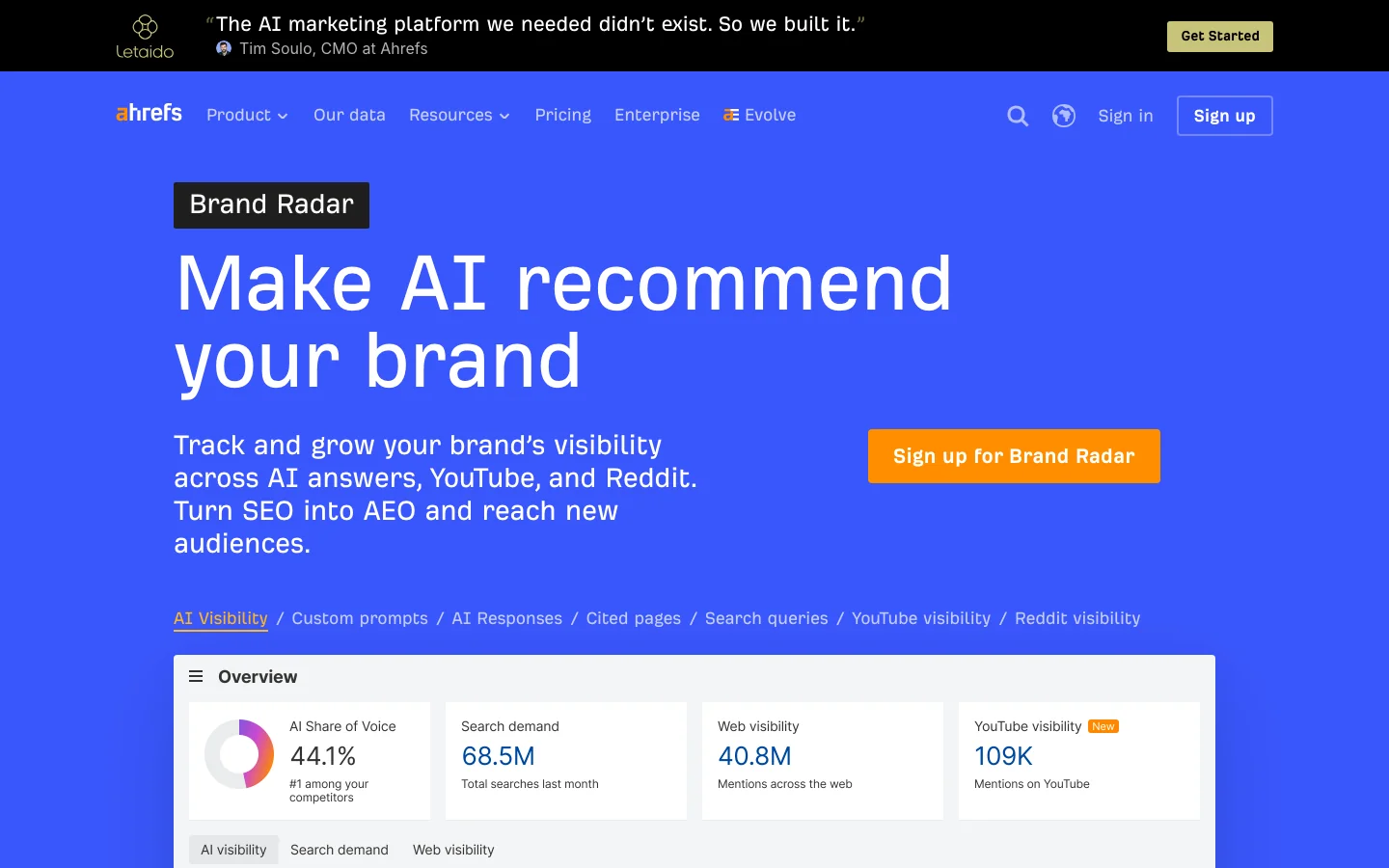
Ahrefs Brand Radar works differently from the rest. Instead of only tracking prompts you type in, it gives you an index of more than 449 million search-backed prompts, so you can check any brand’s AI visibility, including a competitor’s, with no setup. Every prompt maps back to real search volume.
Pricing: every paid Ahrefs plan includes a few custom prompts: Lite ($129/mo) 5, Standard ($249/mo) 10, Advanced ($449/mo) 20. More custom tracking comes in check packages from $50/mo for 2,500 checks. Full index access costs $199/mo per AI platform or $699/mo for all of them. There’s no free trial, and the free checker Ahrefs advertises only shows a thin preview, so budget for a paid plan if you want real data.
- Pro: Six platforms in the index, plus Claude for custom prompts, with API and MCP on every paid plan.
- Con: It gets expensive fast. Claude uses 8 checks per update, and Ahrefs itself says the index works best for brands with real search demand. Small brands will find thin data.
Where it fits: competitive research before you plan a quarter.
7. Otterly.AI: Best for Tight Budgets
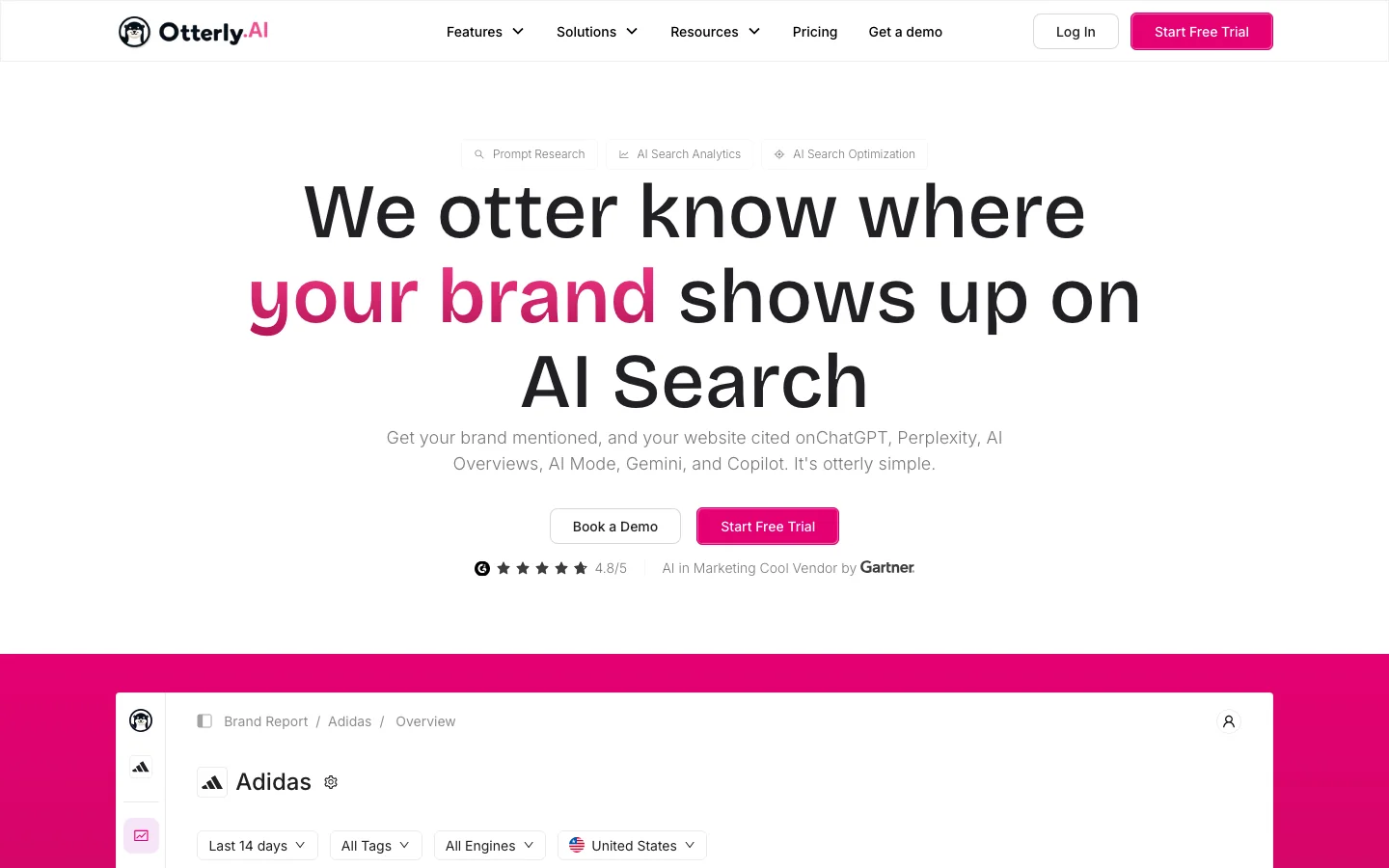
Otterly.AI has the cheapest paid entry point of the ten main picks (Rankscale and ZipTie’s usage-based pricing, in the mentions below, can start lower). It tracks brand mentions and link citations across ChatGPT, Google AI Overviews, Perplexity and Copilot, runs GEO audits on your pages, and tracks ChatGPT Ads on every plan.
Pricing: Lite is $29/mo ($25 billed annually) for 15 prompts. Standard is $189/mo for 100 prompts and adds the API, MCP and a Looker Studio connector. Premium is $489/mo for 400 prompts.
- Pro: It publishes exact API and MCP request quotas (2,000 a month on Standard), which makes agent workflows easy to budget.
- Con: 15 prompts is a sample, not a picture, and Lite can’t be topped up. Claude, Gemini and AI Mode are paid add-ons on every plan.
Where it fits: checking whether AI visibility is worth a real budget before you commit to one.
8. Profound: Best for Enterprise Brands
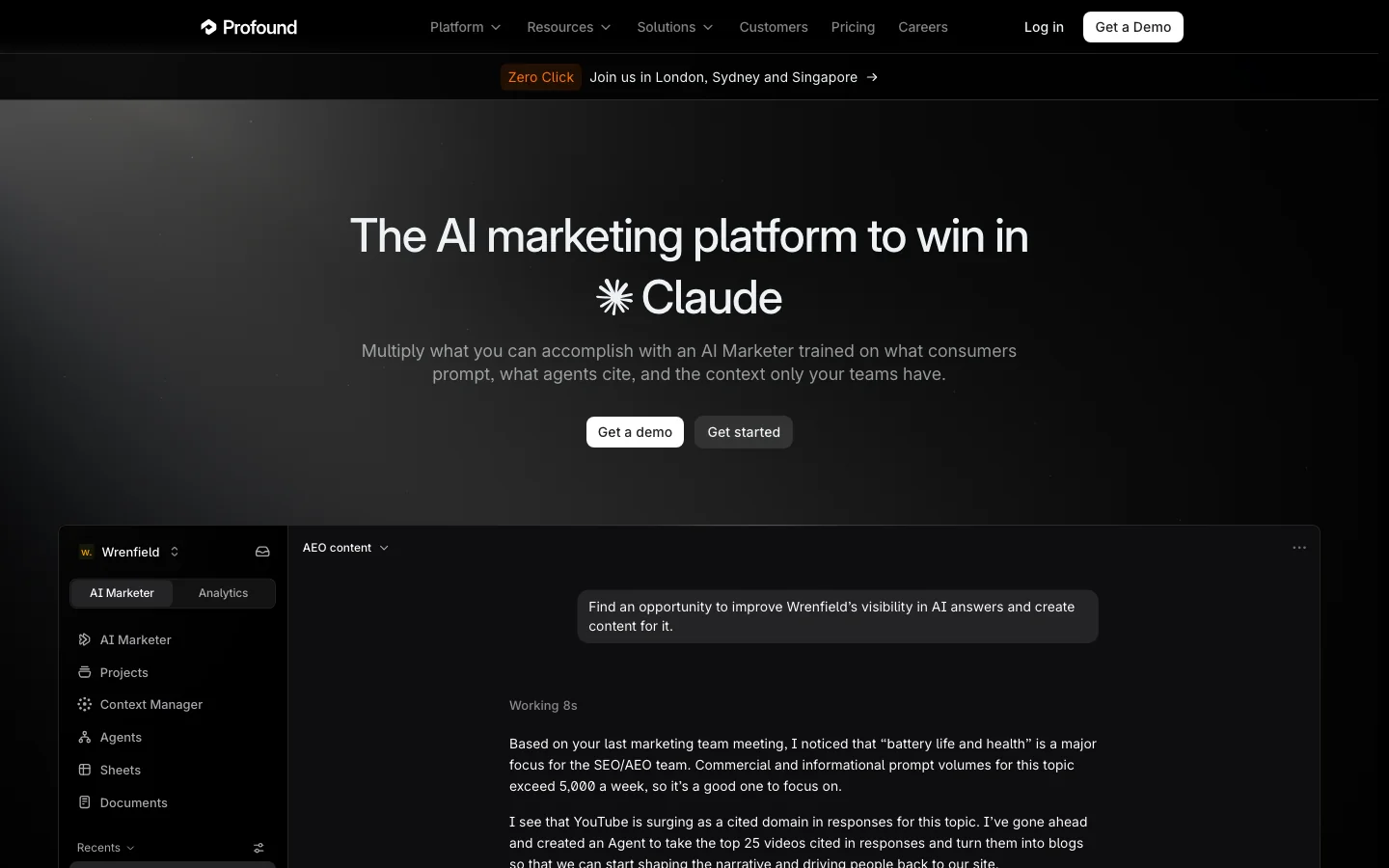
Profound tracks up to nine engines on Enterprise, including Claude, DeepSeek and Copilot, and has grown into what it calls an AI Marketer, which turns visibility gaps into staged content. It also shows what real users ask AI engines (Prompt Volumes) and how AI crawlers hit your site.
Pricing: a 7-day free trial gives you 50 prompts a day on ChatGPT, Gemini and AI Overviews, but from a fixed industry set you can’t edit. After that, brands move to an Enterprise plan at a custom price. Agencies can add client workspaces at $399/mo each.
- Pro: Depth: ChatGPT Shopping tracking, crawler analytics through Cloudflare, Vercel and others, plus SSO and SOC 2.
- Con: I don’t like that there’s no self-serve paid plan for brands. You can’t see a price without a sales call, and the API is Enterprise-only.
Where it fits: brand and comms teams with an enterprise budget and several markets to cover.
9. Scrunch: Best for Changing What AI Agents Read
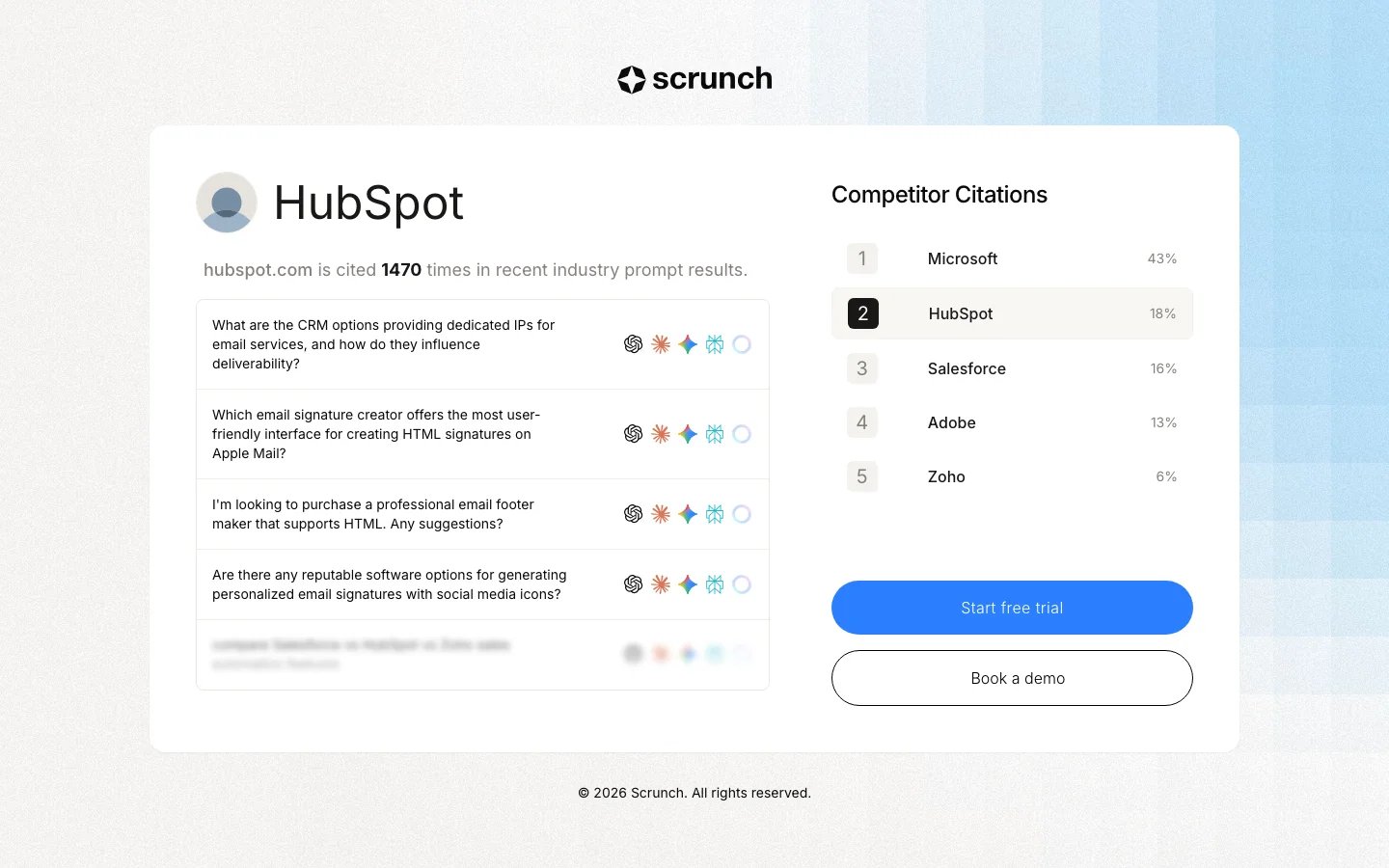
Scrunch monitors mentions, citations and sentiment like the others. Its unusual feature is AXP, which serves a stripped-down, AI-friendly version of your pages to AI agents without changing what humans see.
Pricing: Core is $250/mo for 125 prompts on ChatGPT, Perplexity, AI Overviews and Copilot, with a 7-day trial. Agency Core is $500/mo. AXP, all 9 engines, the API and MCP are Enterprise-only.
- Pro: Site audits and page-level recommendations are built in, and there’s a free site audit with no card.
- Con: At $250/mo, I’d expect more than four engines. Core has no Claude, Gemini or AI Mode, and no API.
Where it fits: mid-market brands whose product pages keep getting misread by AI shopping and research agents.
10. AthenaHQ: Best Free Plan
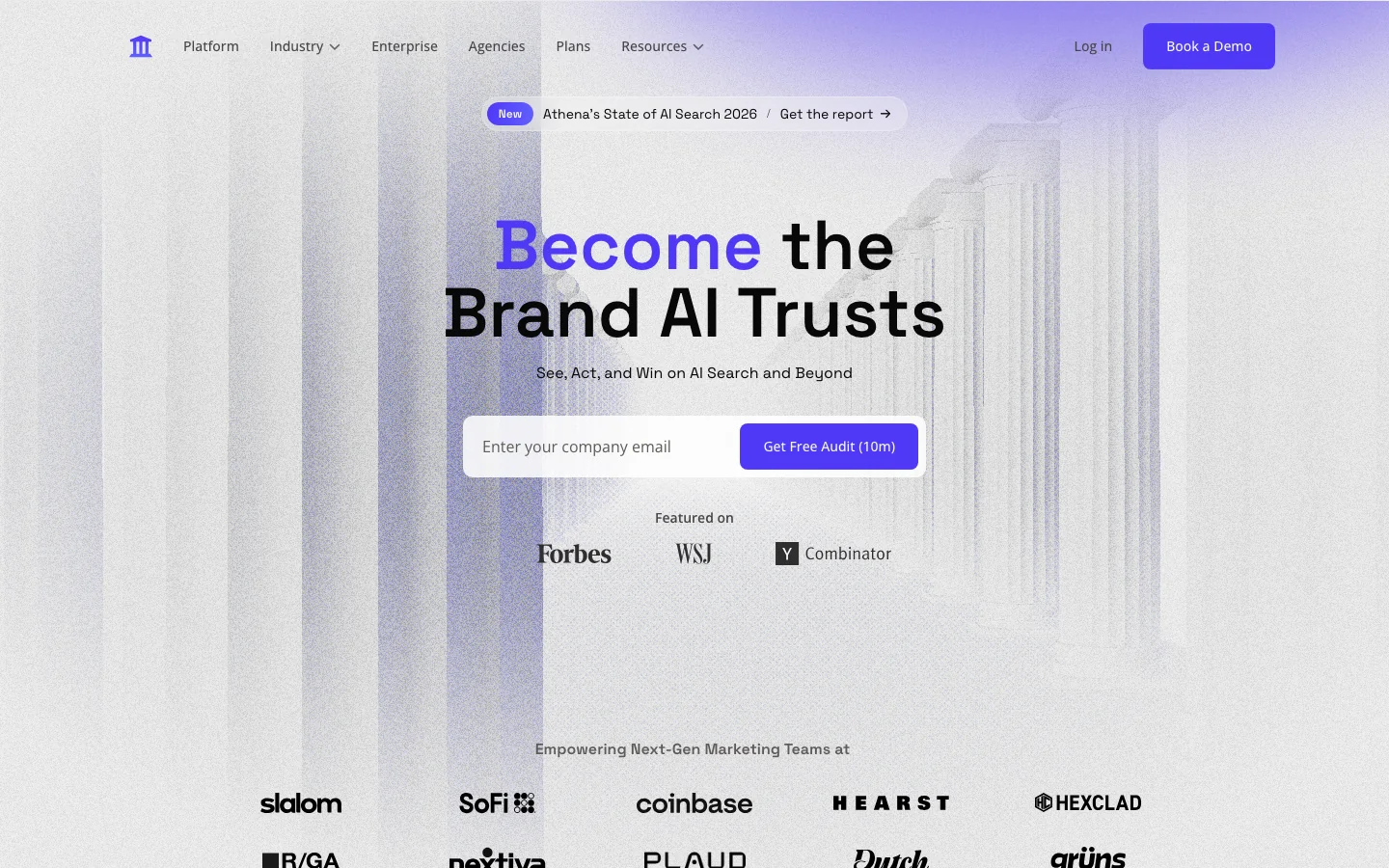
AthenaHQ is one of the few dedicated trackers with a permanent free plan. Pricing runs on credits, where one credit is one AI response, and there’s an agent (Ask Athena) you can question in plain English about your own visibility data.
Pricing: the free Essential plan includes 300 credits across ChatGPT, Perplexity, AI Overviews, Gemini and Copilot. Starter is $295/mo ($245 billed annually) for 3,600 credits across 11 models.
- Pro: Credit pricing lets you weight engines. Spend on the two that matter in your market, not all eleven.
- Con: On Starter, the API and extra credits are paid add-ons with unpublished prices, and you’re limited to one country.
Where it fits: proving the case to your boss with real data before asking for budget.
Worthy Mentions
ZipTie
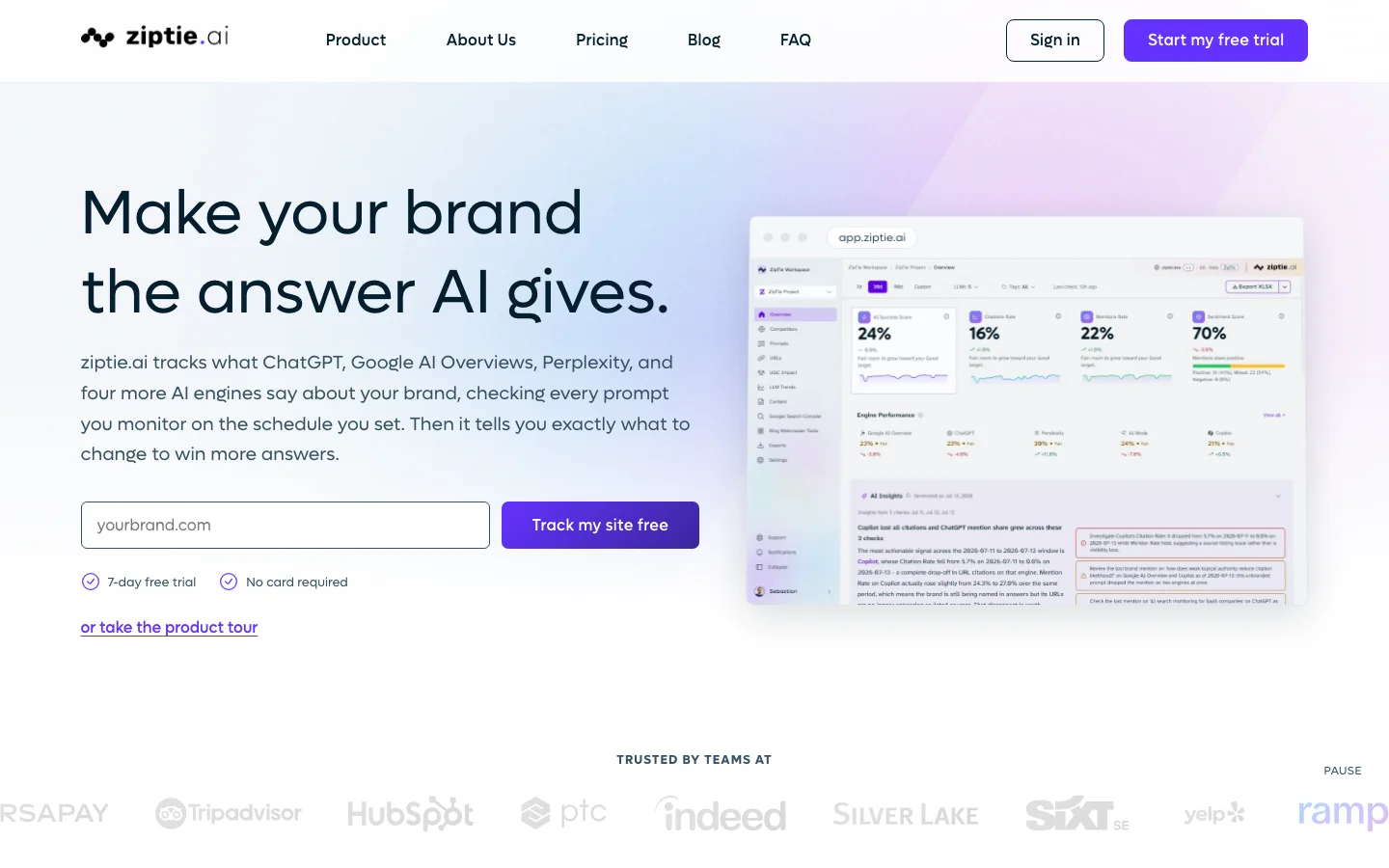
ZipTie lets you build your own price from prompt slots, refresh cadence and engine count. A 50-prompt daily setup on ChatGPT, AI Overviews and Perplexity starts at $42.75/mo, and API and MCP access is a $10 add-on. Cost climbs quickly with more engines.
Writesonic
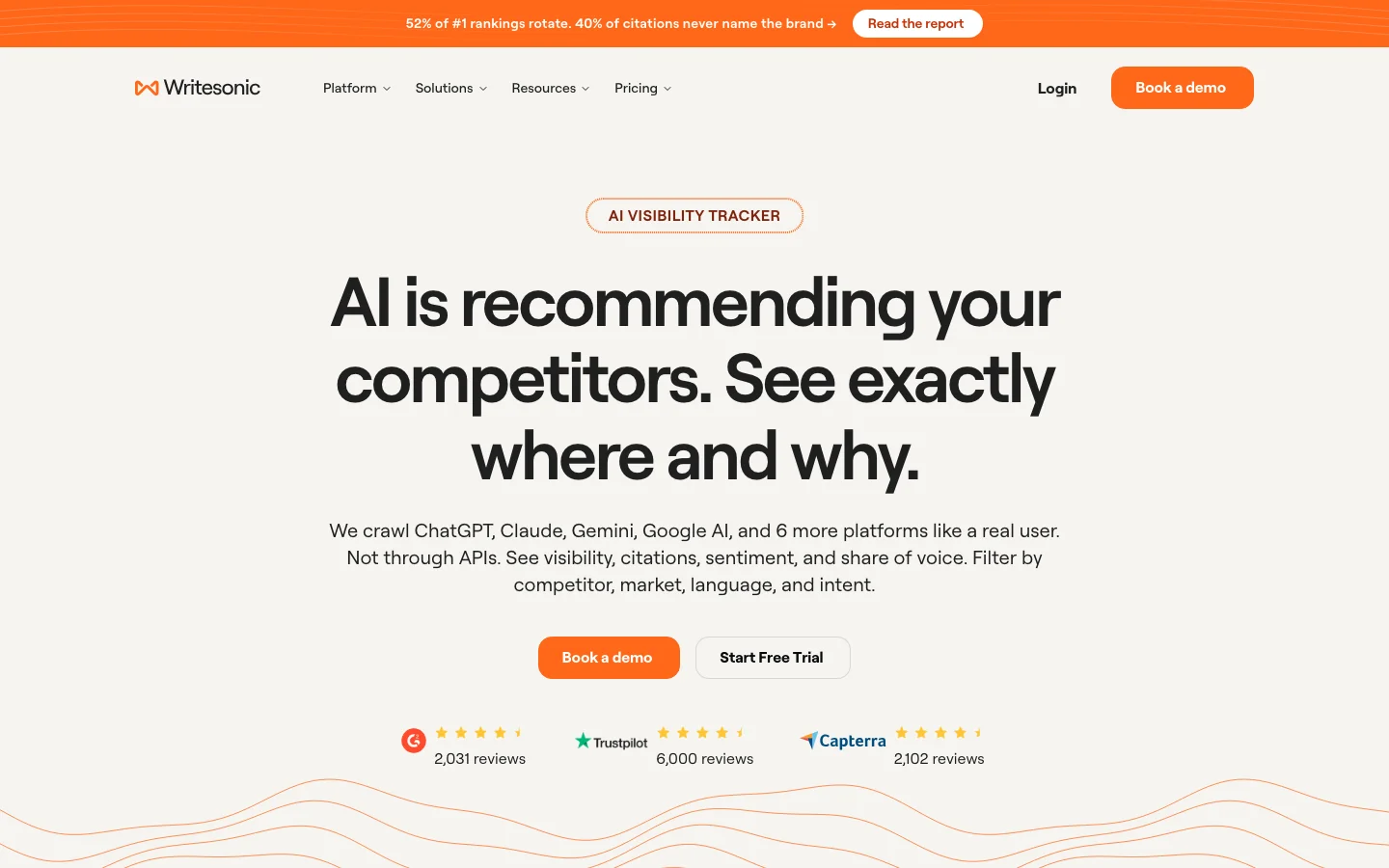
Writesonic bundles AI tracking with an article writer and site audits from $99/mo. Every self-serve plan tracks only ChatGPT, Gemini and AI Overviews, though. The other seven engines need Enterprise. See our Writesonic review.
Rankscale
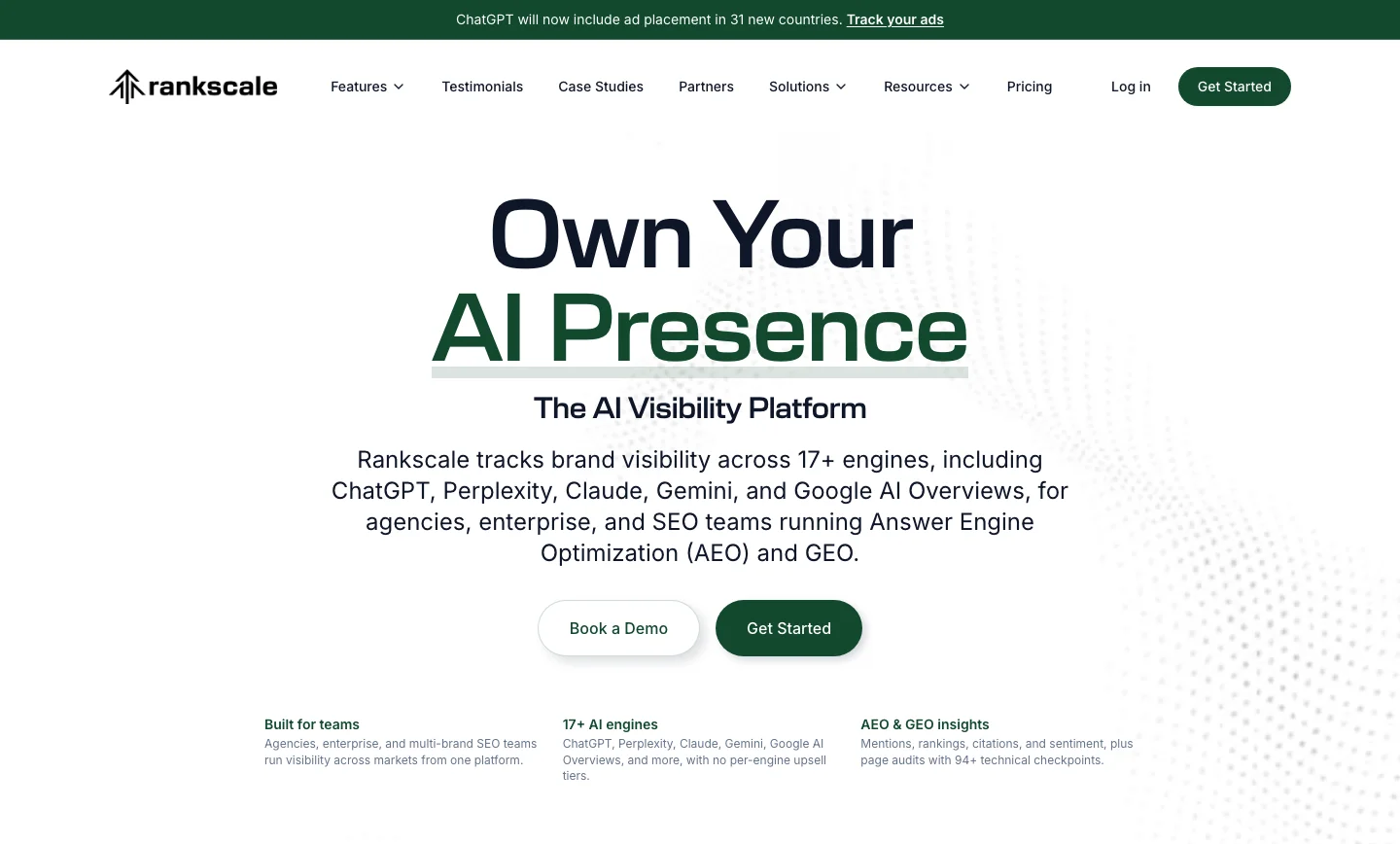
Rankscale starts at $20/mo and puts every engine on every plan, but on credits: a Claude run costs 8 times as many credits as a ChatGPT run, so your real prompt count depends on the mix you pick.
LLMrefs
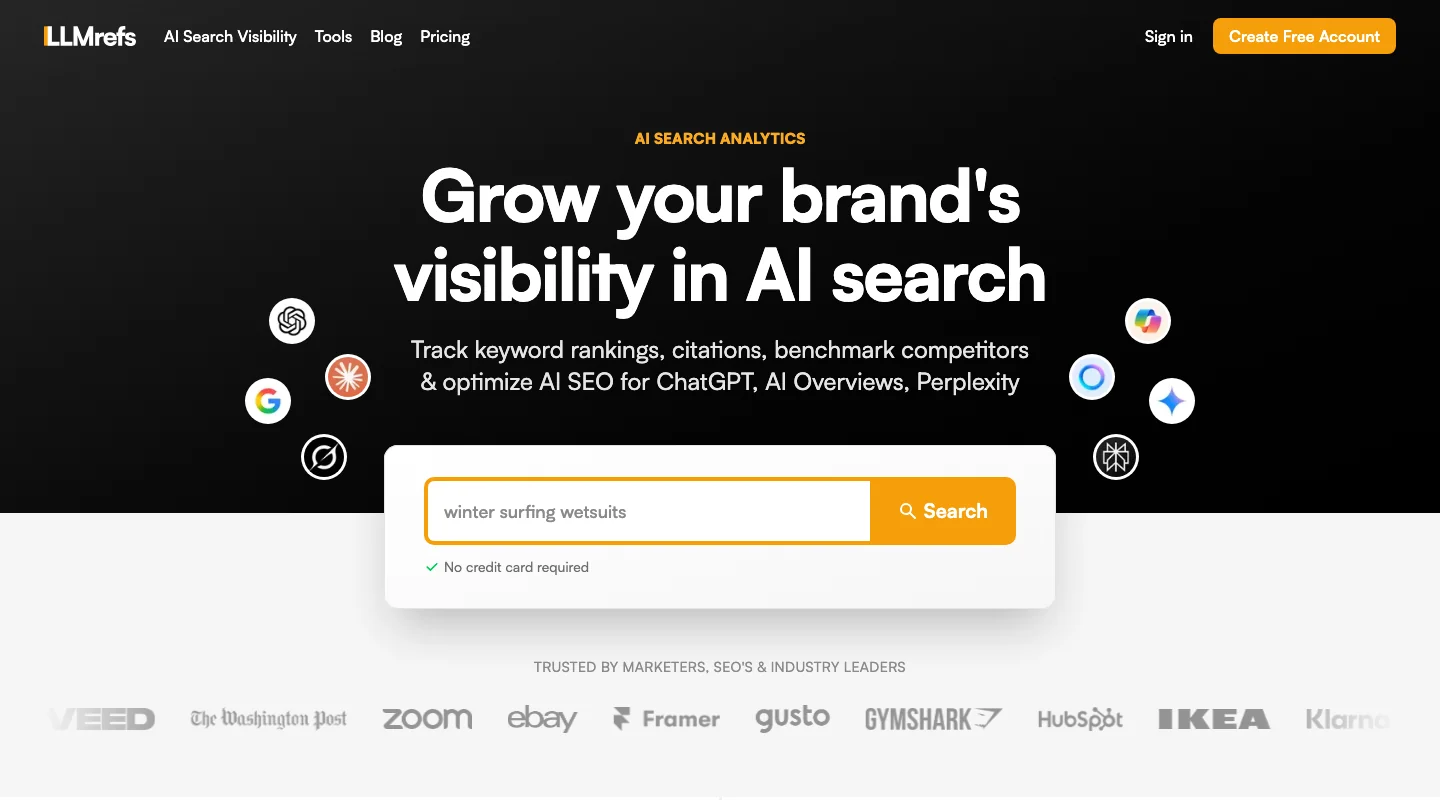
LLMrefs tracks keywords rather than prompts and generates the prompts for you, which will feel familiar to SEOs. One plan, currently $79/mo, covers 500 prompts across all engines, refreshed weekly rather than daily.
HubSpot AI Search Grader
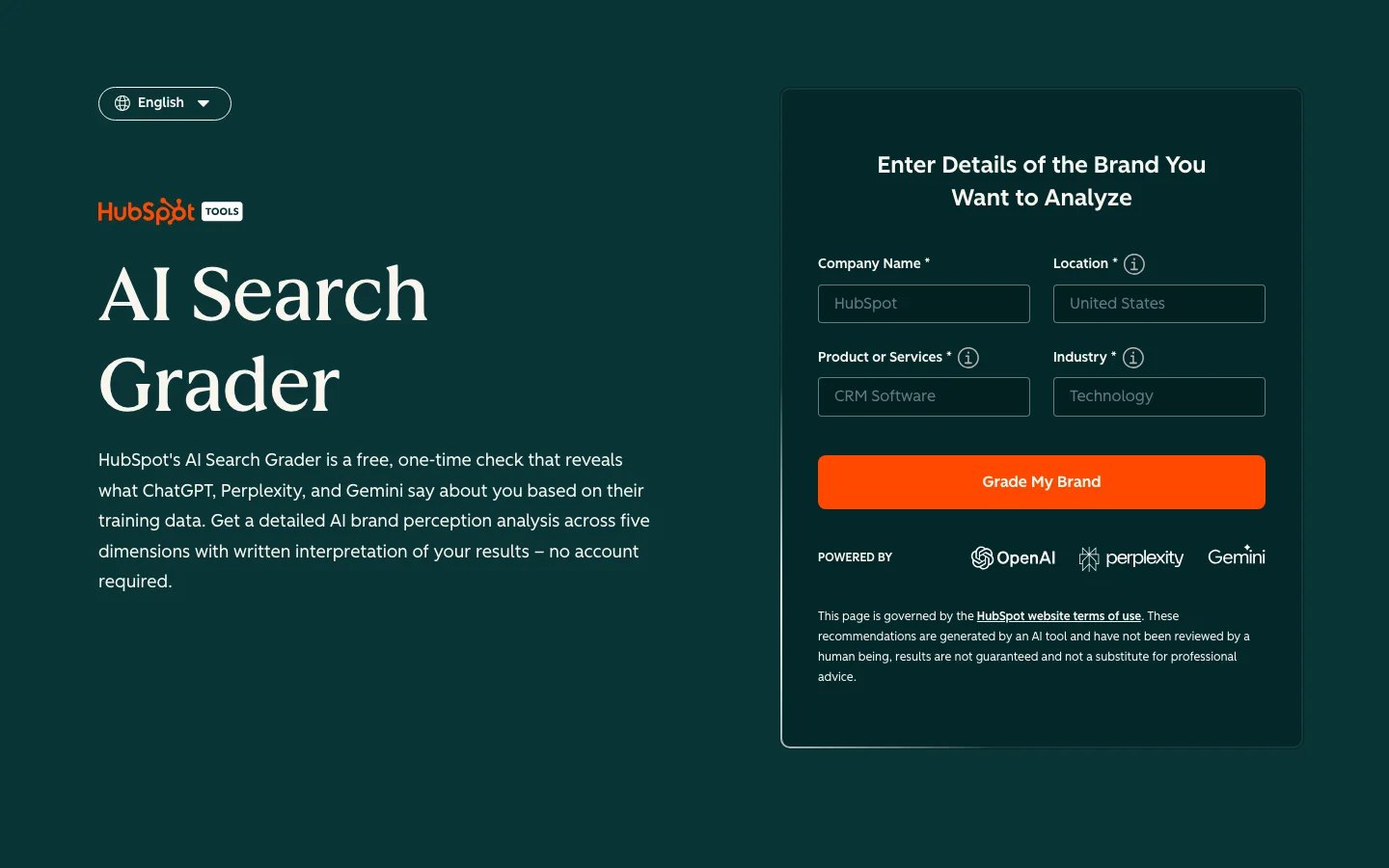
HubSpot’s AI Search Grader is a free, one-time score out of 100 for how AI models describe your brand, and it works on competitors too. It’s a snapshot, not tracking, but it’s a sensible first look.
What AI Visibility Tracking Actually Costs Per Prompt
Headline prices hide how different these plans are. Here’s the monthly cost per tracked prompt on the cheapest paid plan of seven tools that publish a fixed prompt allowance (for Semrush, the standalone AI Visibility Toolkit):
| Tool | Price / prompts | Per prompt | Engines |
|---|---|---|---|
| Frase | $49 / 50 | $0.98 | 2 |
| SE Ranking | $129 / 100 | $1.29 | 5 |
| Peec AI | €85 / 50 | €1.70 | 3 |
| Surfer | $95 / 50 | $1.90 | 5 |
| Otterly.AI | $29 / 15 | $1.93 | 4 |
| Scrunch | $250 / 125 | $2.00 | 4 |
| Semrush | $99 / 25 | $3.96 | 3 |
Cheapest per prompt isn’t automatically best. SE Ranking’s price includes a full SEO suite (Semrush’s $99 toolkit doesn’t), and Frase’s two engines won’t cover a brand whose buyers live on Perplexity. Read the engine column before the price column.
How to Choose the Right AI Visibility Tool
- Already on Semrush, Ahrefs or SE Ranking? Start with what’s inside your suite. Moving your data costs more than the difference in features.
- Want a dedicated AI visibility tracker you can run yourself? Peec AI, with MCP on every plan.
- Your job is publishing and refreshing content? Surfer or Frase, so the gap and the fix live in one tool.
- No budget yet? Run HubSpot’s free AI Search Grader, then try AthenaHQ’s free plan or Otterly’s $29 Lite for a month of real data.
- Enterprise, several markets, legal review of AI claims? Profound or Scrunch Enterprise.
Whatever you pick, remember that AI search runs on top of classic search. 88.46% of the URLs ChatGPT cites come through its search retrieval step, so a page has to rank before it gets cited. Our GEO and AEO statistics have the rest of the data.
Frequently Asked Questions
What are AI visibility tools?
AI visibility tools, also called LLM visibility tools or GEO tools, run a set of prompts through AI engines like ChatGPT, Perplexity, Gemini and Google AI Overviews on a schedule, then report how often your brand is mentioned, which of your pages are cited, the sentiment of the answer, and how you compare with competitors.
Is Google visibility the same as AI visibility?
No, but they’re linked. Ranking in Google makes you far more likely to be cited, yet only 12% of AI assistant citations appear in Google’s top 10 for the same query. You can rank on page one and still be missing from the AI answer.
How do AI search visibility tools work?
You pick 25 to 100 prompts your buyers actually ask, including category, comparison and problem prompts, not just your brand name. The tool (Peec AI or SE Ranking, for example) runs them daily. Then you act on the cited-source report: the pages AI cites for competitors are the ones to beat or get featured on.
Are there free AI visibility tools?
Yes, for snapshots. HubSpot’s AI Search Grader is free, and AthenaHQ has a free plan with 300 credits. SE Ranking offers a 14-day trial and Frase a 7-day trial. For ongoing tracking, paid plans start at $20 to $50 a month, and a useful prompt set usually costs $100 or more.
Which AI engines should I track?
Start with ChatGPT and Google AI Overviews, because they carry the most traffic. Then add whichever engine your buyers use. Perplexity matters for research-heavy B2B audiences, and Copilot for Microsoft-centric enterprises. Check that the plan you’re buying includes those engines, because most entry plans don’t.

Written by
Chintan Zalani
Hey, I’m Chintan, a creator and the founder of Elite Content Marketer. I make a living writing from cafes, traveling to mountains, and hopping across cities. Join me on this site to learn how you can make a living as a sustainable creator.
View Profile →Related Articles

AI Tools & Software
Best Lifetime AI Software Deals 2026
The AI lifetime deals worth buying on AppSumo, StackSocial and direct from vendors: 26 tools an AI assistant can drive through an MCP server or API, with prices, ratings and which ones to skip.
Sep 3, 2026Read more →

AI Tools & Software
Teachable Vs. Thinkific: Exhaustive Comparison
Thinkific and Teachable are consistently ranked among the best online course platforms on the first and second spots. But which one of them is better suited for your online education business requirements without breaking the bank? Let’s break down Teachable vs. Thinkific course platforms. Note: This article contains affiliate links. ... Read more
Apr 8, 2026Read more →

AI Tools & Software
Kajabi Vs. Teachable: Which Is The Better Course Platform
Kajabi and Teachable are popular online course platforms. Both have their share of pros and cons — but which one’s the best suited for your needs? Let’s break down the Kajabi vs Teachable debate in this article. Overall, I’d recommend going for Kajabi if you’re a pro-creator and need a ... Read more
Apr 8, 2026Read more →